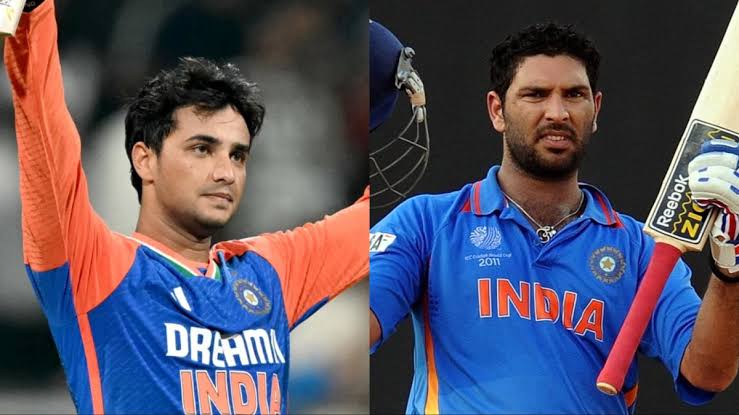

In the space of three weeks in July 2026, the Delhi High Court handed down two interim orders that mark some of the clearest applications yet of deepfake law in India — and that will shape how Indian sportspersons, not just film stars, defend their identity against artificial intelligence. On 13 July 2026, Justice Jyoti Singh protected the personality rights of cricketer Abhishek Sharma, restraining social media accounts, online sellers and e-commerce platforms from using his name, image, voice, likeness or other personality attributes without consent. On 29 July 2026, the same judge went further for Yuvraj Singh, one of the architects of India’s 2011 World Cup win, granting an ex parte ad interim injunction that expressly named the technologies covered: artificial intelligence, generative AI, machine learning, deepfakes, AI chatbots, face morphing and face swapping.
Read together, these two orders are not isolated sports-page curiosities. They are the latest data points in a rapidly consolidating body of Indian case law on personality rights and the right to publicity — and they matter to founders, brands, agencies and public figures well beyond cricket.
Are Personality Rights Legally Recognised in India?
In short: yes, but not through a dedicated statute. Indian courts have consistently recognised that a well-known individual’s name, image, voice, likeness and other identifying attributes are legally protectable against unauthorised commercial or reputational exploitation — including AI-generated exploitation such as deepfakes and voice cloning. This protection is assembled from constitutional privacy law, the tort of passing off, provisions of the Trade Marks Act and Copyright Act, and the takedown obligations under the IT Rules, 2021, rather than from a single personality-rights or publicity-rights law. The Abhishek Sharma and Yuvraj Singh orders discussed below are the latest, and among the clearest, illustrations of how that composite framework actually operates in practice.
What Actually Happened
In Sharma’s case, the suit alleged that several Facebook and Instagram accounts were circulating AI-generated and morphed images placing him in fabricated and objectionable scenarios, alongside videos containing false statements and rumours. Separately, merchants were found to be selling T-shirts, jerseys, posters and photo frames bearing his name and likeness without authorisation — merchandise that could mislead consumers into believing it was endorsed by him. The Court held that Sharma had made out a prima facie case for an ex parte ad interim injunction, that the balance of convenience favoured him, and that denying interim protection would cause irreparable harm to his reputation and commercial interests.
Yuvraj Singh’s case involved more specific and, frankly, more troubling fact patterns. The plaint described AI-generated content falsely depicting him standing at the Golden Temple with his head uncovered, a fabricated scene of a fellow cricketer touching his feet, content portraying him as violent or abusive, and a Reddit post falsely attributing misogynistic views to him. Alongside this, unauthorised sellers were commercially exploiting his identity through T-shirts, photo frames and stickers. Justice Singh restrained the defendants — including unidentified “John Doe” parties — from using, reproducing, publishing or exploiting his name (including the nickname “Yuvi”), image, voice or likeness for commercial or personal gain, and specifically prohibited the creation and dissemination of AI-generated or manipulated audio-visual depictions of him. The Court’s language was pointed: those violating personality and privacy rights of a public figure of this stature, it said, need to be “dealt with a heavy hand.”
Are Deepfakes Part of a Much Larger Pattern?
Neither cricketer is litigating in a vacuum. Over the preceding months, the Delhi High Court had already granted comparable interim relief to actors Aishwarya Rai Bachchan, Abhishek Bachchan and Salman Khan, Art of Living founder Sri Sri Ravi Shankar, journalist Sudhir Chaudhary, podcaster Raj Shamani, and Andhra Pradesh Deputy Chief Minister Pawan Kalyan. What began as a Bollywood-specific concern has clearly widened into a general-purpose legal remedy for anyone whose identity carries commercial or reputational value — athletes, public intellectuals, politicians and digital creators alike.
Also Read: Raghav Chadha v. Ashok Kumar & Ors Examined
India does not have a standalone personality rights law. What it has instead is a composite, judge-built framework assembled from constitutional privacy jurisprudence, the tort of passing off, provisions of the Trade Marks Act and Copyright Act (which protect brand elements and creative works but not a person’s face or voice directly), and the takedown machinery under the IT Rules, 2021. Courts have filled the gap by recognising that a well-known person’s name, image, voice, likeness, gestures and other distinctive attributes carry independent commercial value that deserves protection against unauthorised exploitation — and, increasingly, against AI-specific harms like voice cloning, face-swapping and synthetic video.
What is a John Doe (Ashok Kumar) Order?
The “John Doe” order — sometimes called an “Ashok Kumar” order in Indian practice — is an injunction granted against unnamed, unidentified defendants. It has become the procedural workhorse of Indian deepfake litigation, because deepfake operators are frequently anonymous, distributed across dozens of accounts, and impossible to name individually at the time of filing. Rather than requiring a plaintiff to identify every infringing account before the court will act, a John Doe order allows relief to bind “all persons” engaged in the described infringing conduct — including accounts that don’t yet exist at the time the order is passed. The Sharma and Yuvraj Singh orders both extend this mechanism to intermediaries and unidentified account holders, requiring platforms to act on takedown notices even before every infringer is identified. For any public figure or brand considering legal action against AI-driven impersonation, understanding this mechanism matters as much as understanding the underlying personality rights claim itself — it’s usually the John Doe order, not the substantive personality rights argument, that determines how fast relief actually arrives.
What Do Deepfakes Affect Celebrities?
For businesses and individuals watching this trend, three practical lessons stand out:
First, courts are treating “commercial use” broadly.
It isn’t limited to formal endorsement deals. Unauthorised merchandise, AI chatbot personas, and even non-commercial reputational fabrications (like the falsified Golden Temple image or the misattributed social media post) have all been treated as actionable. A business generating AI content that references a real person’s name, image or voice — even for satire, marketing inspiration, or “fan content” — is operating in territory the courts have shown they will restrain.
Second, the absence of a dedicated statute is not a shield.
Litigants and their counsel are successfully assembling relief from existing tools — passing off, privacy, IT Rules takedown obligations — rather than waiting for Parliament to legislate a standalone personality rights framework. Any compliance strategy that assumes “there’s no specific law against this” is now demonstrably out of date.
Third, speed and specificity of evidence matter enormously.
Both orders turned on plaintiffs being able to show the Court concrete, screenshot-level evidence of infringing content and its commercial exploitation. For anyone contemplating similar action, that evidentiary discipline — dated screenshots, matched URLs, documented merchandise listings — is what converts a strong claim into an actual ex parte order.
Also Read: What is the Digital Personal Data Protection (DPDP) Act
The Road Ahead for Personality Rights Cases
Both orders remain interim, pending fuller adjudication, and neither creates binding precedent in the way a Supreme Court ruling would. But the consistency with which Delhi High Court judges — particularly on this bench — are granting near-identical relief to public figures across entertainment, politics, religious leadership and now professional sport suggests a settled judicial posture rather than a one-off sympathy for celebrities. For sportspersons building personal brands worth crores in endorsements, and for any business whose marketing, content, or AI tooling touches a real person’s identity, the message from these two July 2026 orders is straightforward: Indian courts are willing to act fast, act broadly, and act against parties they cannot even name — and that changes the risk calculus for everyone operating in this space.
Cricket occupies a unique commercial position in India — its athletes carry endorsement portfolios that rival, and in several cases exceed, those of film stars, and the sport generates a volume of real-time social content (match clips, celebratory moments, post-match interviews) that gives AI-generation tools an unusually large and readily available training and manipulation surface. A cricketer’s face, voice, and mannerisms are extensively documented across broadcast footage, making them comparatively easy to convincingly synthesise. That combination — high commercial stakes plus abundant source material — likely explains why cricketers have joined the personality rights litigation wave more visibly and more quickly than professionals in most other fields, and why sports bodies, franchises and endorsement partners should expect this category of dispute to keep growing rather than plateau.
Final Thoughts
Both the Sharma and Yuvraj Singh orders were obtained on an ex parte basis — meaning the defendants were not present or heard before the injunction was granted. This is a deliberate and well-established feature of Indian civil procedure in cases involving anonymous, fast-moving online harm: requiring a plaintiff to first identify and serve every infringing account before obtaining any relief would make the remedy meaningless, since the content could spread far beyond containment in the time that process takes. The trade-off is that these orders remain provisional, subject to the defendants’ right to appear and contest them at a later hearing — which is precisely why neither case should be described as a final, binding judgment, even though the interim relief itself is fully enforceable in the meantime.
If you are a public figure, brand or business exploring what legal protection is available against AI-driven misuse of identity, a celebrity personality rights lawyer in India can advise on the specific mix of remedies — passing off, privacy law, IT Rules takedown notices, and John Doe relief — that fits a given situation.