
On 21st May 2026, the Delhi High Court reserved its order on the interim relief application filed by Rajya Sabha MP Raghav Chadha in a suit styled Raghav Chadha v. Ashok Kumar & John Doe and Ors. The case has attracted significant legal attention — not merely because of who the petitioner is, but because of the constitutional and jurisprudential questions it has forced the Court to confront: Can the doctrine of personality rights — historically developed to protect celebrities from commercial exploitation of their identity — be extended to shield a politician from the consequences of a controversial political decision? And where, precisely, does protected political criticism end and actionable defamation or personality rights infringement begin?
Justice Subramonium Prasad’s oral observations during the hearing have crystallised these questions with unusual clarity. This blog examines the factual background of the case, the legal framework invoked, the Court’s preliminary observations, and the broader significance of this dispute for the evolving jurisprudence of personality rights in India.
Background: The Petitioner and the Dispute
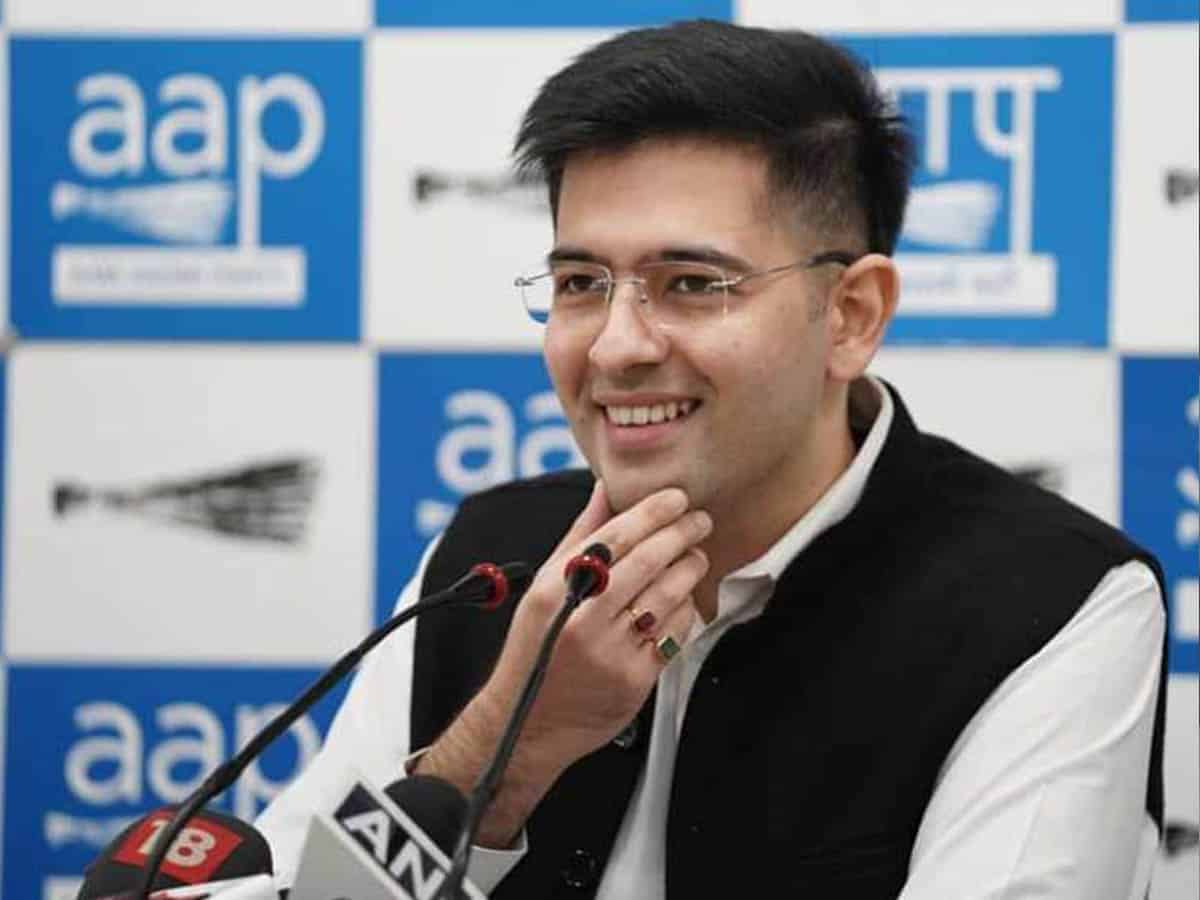
Raghav Chadha is a Rajya Sabha Member of Parliament who, after more than a decade with the Aam Aadmi Party (AAP), defected to the Bharatiya Janata Party (BJP) in April 2026. The political shift was contentious and attracted sharp public commentary — much of it circulating on social media — with several posts alleging that Chadha had, in effect, “sold himself for money.”
In response, Chadha approached the Delhi High Court with a two-limbed suit. First, he sought protection of his personality rights against the alleged misuse of his image, voice, likeness, and identity through AI-generated deepfakes, morphed videos, synthetic voice clones, and fabricated speeches being disseminated on social media platforms. Second, he sought a John Doe (Ashok Kumar) injunction against unknown entities, as well as named defendants, to restrain them from exploiting his personal traits without consent.
At the hearing, Senior Advocate Rajiv Nayar, appearing for Chadha, narrowed the interim relief application to the allegedly defamatory posts — those specifically suggesting that Chadha had traded his political allegiance for financial consideration.
The Legal Framework Invoked
The petition invokes a confluence of constitutional rights and judicial doctrine. It is worth examining each strand separately.
Personality Rights and Article 21
India does not have a standalone statute governing personality rights. The doctrine has developed entirely through judicial interpretation, anchored primarily in Article 21 of the Constitution, which guarantees the right to life and personal liberty — interpreted expansively by the Supreme Court to include the right to live with dignity, the right to privacy, and the right to control one’s own identity and persona.
The foundational constitutional moment came with the nine-judge bench decision in Justice K.S. Puttaswamy (Retd.) v. Union of India (2017), which recognised privacy as a fundamental right intrinsic to Article 21. Building on this, courts have consistently held that the unauthorised commercial exploitation of an individual’s name, image, voice, or likeness constitutes a violation of that individual’s constitutional right to control their own identity.
In ICC Development (International) Ltd. v. Arvee Enterprises, the Delhi High Court clarified that the right of publicity derives from the right to privacy and inheres only in individuals — not corporations or events. The Court further held in subsequent cases that personality rights cover the full composite of an individual’s characteristics, including name, voice, image, likeness, mannerisms, gestures, and catchphrases.
The Tension with Article 19(1)(a)
Personality rights are not absolute. They operate in constant tension with Article 19(1)(a), which guarantees the fundamental right to freedom of speech and expression — including the right to criticise, satirise, and comment on the conduct of public figures, particularly those who have voluntarily entered public life.
Courts have consistently held that while free speech is protected in the form of news reporting, satire, parody, or fair criticism, it crosses the line into unlawfulness when it results in “tarnishment, blackening, or jeopardising a person’s identity or reputation.” The challenge — and the difficulty at the heart of the Chadha case — is that the line between robust political criticism and actionable defamation or personality rights infringement is, as Justice Prasad himself acknowledged, “quite thin.”
The John Doe Injunction
The John Doe (or “Ashok Kumar”) injunction is a well-established procedural mechanism in Indian IP and personality rights litigation. It allows courts to grant injunctive relief against unknown, unnamed defendants — particularly relevant in the context of anonymous online actors disseminating deepfakes or defamatory content. The mechanism has been routinely deployed in personality rights cases before the Delhi and Bombay High Courts, and its invocation here is procedurally appropriate given the anonymous nature of much of the alleged content.
The Court’s Observations: A Case Study in Judicial Line-Drawing
Justice Subramonium Prasad’s oral observations at the hearing are analytically significant and deserve careful examination.
i. Personality Rights vs. Political Criticism
At the outset, Justice Prasad made a critical distinction: the personality rights doctrine, as developed in Indian jurisprudence, has primarily addressed the unauthorised commercial exploitation of a public figure’s identity — the use of a celebrity’s name or image to sell products, endorse services, or generate revenue without consent. The content before the Court in the Chadha case was, in the Court’s prima facie assessment, something qualitatively different: criticism of a political decision. “Unlike other judgments,” the Court observed, “here it’s just criticism taken on decisions taken by you in the political arena… It is a comment by a person criticising a political decision.”
This is a doctrinally important observation. It suggests that the Court is alive to the risk of personality rights claims being weaponised by public figures to suppress political commentary — a concern that goes to the heart of democratic discourse. Political figures, by the very nature of their role, are subject to a higher degree of public scrutiny and accountability. Their decisions in the political arena are, and must be, open to criticism.
ii. The Defamation vs. Criticism Threshold
The Court also addressed the defamation question head-on. Chadha’s Senior Counsel argued that allegations suggesting he had “sold himself for money” crossed from criticism into defamation — content that imputes dishonest motivation to a public act and thereby damages reputation. The Court acknowledged that the distinction between criticism and defamation is “quite thin” and that “it is very easy to slip to the other side, which affects your right to live with dignity.”
However, the Court stopped short of holding that interim relief was warranted at this stage. It noted that whether the posts amounted to defamation would require detailed examination, and that the constitutional right to free speech under Article 19(1)(a) — including the right to criticise public figures over their political choices — could not simply be “taken away.” Justice Prasad also referenced the long tradition of political satire in India, including the iconic cartoons of R.K. Laxman: “From independence, we are seeing R.K. Laxman cartoons. At that point in time, probably social media had not gone to that extent; today it has.”
iii. The AI and Deepfake Dimension
The petition’s AI dimension raises a distinct set of legal considerations. Chadha sought specific restraint on the creation and circulation of AI-generated deepfakes, synthetic voice clones, morphed visuals, and fabricated speeches. These are not matters of political commentary — they involve the technological fabrication of content that did not exist, designed to mislead the public by presenting false words and images as genuine.
This is precisely the terrain where personality rights jurisprudence has been most active. However, a critical observation from Chadha’s counsel illustrates the procedural difficulty: several screenshots placed before the Court were, as the counsel for Meta submitted, merely newspaper reports — not deepfakes. The distinction matters enormously. Restraining the reproduction of genuine news reporting about a politician’s decision would be a far more constitutionally fraught intervention than restraining AI-generated fabrications of his voice or image.
Justice Prasad indicated that the Court may appoint an amicus curiae to address the broader legal questions — particularly the balance between free speech and dignity in the digital age — suggesting an awareness that this case raises issues larger than the immediate facts.
Key Legal Questions the Reserved Order Must Address
When the Court delivers its reserved order, it will need to grapple with several legally significant questions:
First, does the personality rights doctrine, as it has developed in Indian jurisprudence, extend to protect a politician’s persona from criticism of their political conduct — or is it confined to protection against unauthorised commercial exploitation of identity? The existing case law, developed primarily in the context of film stars, musicians, and sports personalities, does not offer a clear answer in the political context.
Second, is the content before the Court better characterised as political criticism (protected under Article 19(1)(a)) or as defamatory falsehood (actionable under the law of defamation)? If the latter, Chadha’s appropriate remedy may lie in a defamation suit — which carries different evidentiary burdens and legal standards — rather than in a personality rights framework.
Third, how does the Court parse the AI-generated content from the ordinary commentary? A blanket injunction covering all allegedly offending material would risk capturing genuine political speech within its ambit. The Court must identify and separate the AI-fabricated material from the constitutionally protected commentary — a task that may require technical assistance.
Fourth, what is the appropriate standard for granting interim injunctive relief in this context? The tripartite test of prima facie case, balance of convenience, and irreparable harm must be applied — and given Justice Prasad’s observations that the content prima facie appeared to be political criticism, the prima facie case threshold may present a significant hurdle for the petitioner.
5. The Evolving Jurisprudence: Where Does This Case Fit?
The Chadha case arrives at a particularly active moment in the development of Indian personality rights law. The Delhi High Court has, in rapid succession, granted personality rights protection to a diverse range of public figures — and each case has incrementally expanded the doctrine.
Amitabh Bachchan secured one of the earliest and most expansive orders in 2022, restraining a broad class of entities from using his name, image, and voice. Anil Kapoor followed, securing protection even for his distinctive catchphrase “jhakaas.” Jackie Shroff obtained relief against the unauthorised use of his name, registered trademarks, and persona. Aman Gupta — whose case the newsletter this blog accompanies also covers — obtained interim relief specifically directed at AI-generated deepfakes and fake endorsements. Singer Arijit Singh secured relief from the Bombay High Court after AI platforms were found to be cloning his voice. Aishwarya Rai Bachchan’s petition against AI-generated misuse of her image and likeness, including its use for sexual content, demonstrated the gravity of the threat posed by the technology.
Beyond the entertainment world, political figures have also sought and received personality rights protection. Congress leader Shashi Tharoor and Andhra Pradesh Deputy Chief Minister Pawan Kalyan have both obtained orders from the Delhi High Court restraining the unauthorised use of their identities. Notably, the Court has also been confronted with the personality rights of religious and spiritual public figures — the case involving Baba Ramdev raised directly analogous questions about the boundary between protected satire and unlawful misuse, with the Court acknowledging that public figures “cannot be so sensitive” to criticism.
What the Chadha case introduces — and what makes it jurisprudentially distinctive — is the explicit intersection of personality rights with active, live political controversy. Prior cases largely involved celebrities whose public persona was being commercially exploited or digitally fabricated. Chadha is seeking to invoke the same legal doctrine to restrain commentary on a political act — his defection from one party to another — that is, by its very nature, a matter of intense public interest and debate.
The Court’s instinct to resist this extension is legally sound. A doctrine that was developed to protect private persons and celebrities from commercial exploitation of their identities must not become a tool by which politicians insulate themselves from public accountability. This would fundamentally distort the balance that the constitutional framework — between Article 21’s protection of dignity and Article 19(1)(a)’s guarantee of free speech — is designed to maintain.
Conclusion
The reserved order in Raghav Chadha v. Ashok Kumar & Ors will be significant regardless of which way it goes. If the Court grants interim relief, it will need to draw carefully circumscribed limits to avoid suppressing protected political speech. If it refuses, it will reaffirm that personality rights — however robustly protected in the commercial and AI context — cannot serve as a shield for politicians seeking to deflect public scrutiny of their political conduct.
What the case has already done, regardless of outcome, is expose a gap in India’s legal framework: there is no statute governing personality rights, no clear statutory distinction between commercial misappropriation and political criticism, and no dedicated legal regime for AI-generated identity abuse. The Court’s indication that it may appoint an amicus curiae suggests an awareness that the questions raised here require considered, principled answers — not merely case-by-case improvisation.
India’s courts have built an impressive body of personality rights jurisprudence through a series of incremental decisions. The Chadha case now asks them to do something harder: to define its outer limits. How the Delhi High Court answers that question will shape the doctrine for years to come — not just for politicians, but for every public figure who seeks to use the law to manage their digital identity in an age of AI.
_______________________________________
This article is intended for informational purposes only and does not constitute legal advice. The matter discussed is sub judice, and developments may occur after the date of publication.